After discussing this idea with Scouts and Scouters over the years, our
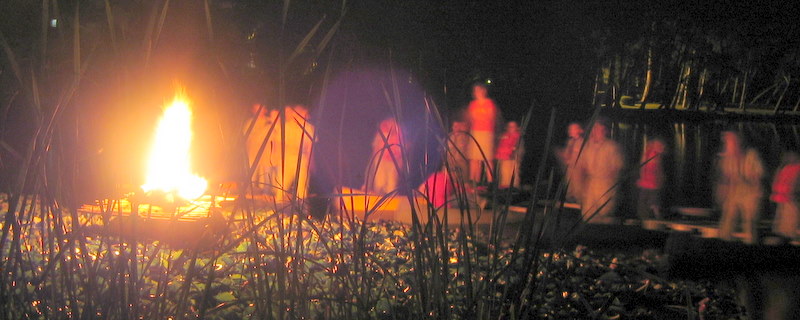
group finally got around to holding a campfire on the water on Friday night (read Akela's report
here) .
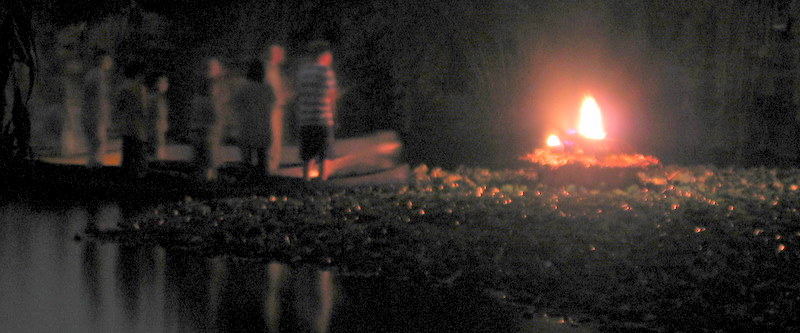
The Scouts were on catamarans made from two flat-bottomed canoes ('Indian' canoes) lashed together with 3m poles. The fire itself was built on a
Two-barrel camel raft with a fire-proof top- the detail for fireproofing was borrowed from camp kitchen tables. Safely anchored amongst waterlilies to help stabilise the raft (see my observations below) the campfire was a great success.

A few observations:
-the raft we used was a little small: with the barrels so close together, the fire had to be placed very carefully to balance the raft properly.
A larger raft with more distance between barrels would be far more stable.
-we tried to hold a campfire with our Scouts on the water and our Cubs on the shore- this didn't work because the distance was too great, and we couldn't hear the Scouts during skits and quiet songs.
If you hold a campfire on the water, everyone involved should be on the water.
-This campfire ended with '
Dip,Dip and Swing' (with slightly different lyrics). About halfway through the song the patrols realised that they could in fact
'Dip, Dip and Swing' away from the campfire in their canoes. This was a nice touch.
-
Put the fire out as soon as the campfire finishes! One of the campfire traditions we follow is to allow the fire to (safely) burn out naturally without being extinguished. Around midnight we heard a loud explosion- on investigation it turned out that the fire had burnt through the deck and fallen on to the barrels, heating them up and causing one of them to rupture.
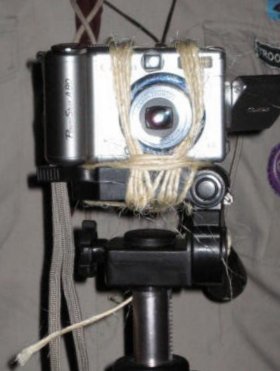
-Pioneering skills can help you
take better photographs.
-Safety precautions: obviously
all of the usual precautions for water activities should be taken- life jackets, qualified operators etc. Ensure that the fire raft is securely anchored- you don't want it floating freely amongst your boats. Check that you have someone qualified to supervise Scouts in night activities on the water if your Scout Association allows them.